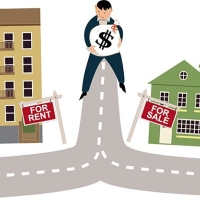
The classic advice in the Greater Toronto Area (GTA) used to be simple: buy real estate at all costs. However, with Toronto consistently ranked among the world's most overvalued housing markets, the financial reality has fundamentally shifted.
Choosing between renting a condo in downtown Toronto or buying a townhouse in Brampton, Mississauga, or Durham Region requires balancing high interest rates with personal lifestyle goals. This guide breaks down both paths using real GTA market context.
The choice between renting and buying in Ontario depends heavily on your timeline and how aggressively you invest your cash flow gaps.
Buying: Forced Savings and Land Equity
- Equity Growth: Monthly mortgage payments act as a forced savings account, slowly building ownership in a highly prized regional asset class.
- Long-Term Appreciation: Despite short-term market corrections, GTA real estate historically gains value over time, driven by steady immigration and high population growth.
- Principal Residence Exemption: In Canada, any capital gains realized when selling your primary home are 100% tax-free.
- Predictable Baseline Costs: A fixed-rate mortgage protects you from the volatile GTA rental market, ensuring your baseline principal and interest payments remain identical for your term.
Renting: Cash Liquidity and Market Opportunity
- Capital Liquidity: Renters do not lock up massive amounts of cash in a down payment, keeping capital free for flexible investment vehicles.
- Tax-Sheltered Alternatives: A renter can fully maximize their Tax-Free Savings Account (TFSA) and Registered Retirement Savings Plan (RRSP), outperforming traditional real estate without property tax drag.
- No Maintenance Exposure: Renters face zero financial exposure to soaring Ontario condo condo fees, special assessments, or unexpected systemic repairs like a broken HVAC system.
- Sunk Costs Realism: While rent is a unrecoverable cost, homeownership in the GTA carries massive non-recoverable expenses including land transfer taxes, property taxes, home insurance, and high mortgage interest.
Lifestyle and Flexibility Comparisons
Your living situation dictates your career mobility, daily commute times along the GO transit corridors, and property maintenance commitments.
+--------------------------+--------------------------+

|         RENTING          |          BUYING          |
+--------------------------+--------------------------+

| • High career mobility   | • Long-term stability    |
| • Zero maintenance tasks | • Full creative control  |
| • Landlord Tenant Board  | • Exposure to variable   |
|   eviction protections   |   condo fee increases    |
+--------------------------+--------------------------+
- Mobility vs. Transaction Friction: Renters can pack up and relocate closer to a new job hub with zero transactional friction. Buyers face hefty transaction costs—including Toronto's unique double Land Transfer Tax—requiring them to stay put for years to break even.
- Control vs. Convenience: Homeowners can remodel and landscape at will. Renters must accept existing layouts and navigate Ontario's Landlord and Tenant Board (LTB) backlogs if major maintenance disputes arise with a landlord.
Real-World GTA Case Study: The 10-Year Outlook
Let us compare a renter and a buyer over a 10-year timeline in a typical suburban GTA neighborhood.
The Scenario Assumptions
- Property Value: $850,000 (A typical 2-bedroom condo or suburban townhome)
- Buyer Down Payment: 20% ($170,000)
- Mortgage Rate: 5.0% on a 5-year fixed loan (amortized over 25 years)
- Initial Monthly Rent: $2,800 (increasing 2.5% annually, aligned with provincial guidelines)
- Property Appreciation: 3.5% annually
- Alternative Investment Return: 7% annually (for the renter's invested down payment)
The Buyer's Financial Path
- Initial Monthly Payment: $3,954 (Principal & Interest) + $700 (Taxes, Insurance, Condo/Maintenance Fees) = $4,654
- Home Value After 10 Years: Appreciates from $850,000 to $1,200,600
- Remaining Mortgage Balance: Reduced to roughly $488,000 via monthly payments
- Gross Home Equity: $712,600 (Value minus remaining loan)
The Renter's Financial Path
- Initial Monthly Savings: The renter pays $2,800 initially, saving $1,854 per month compared to the buyer's total monthly housing outlay.
- Down Payment Growth: The $170,000 down payment invested in a balanced stock portfolio at 7% grows to $334,420 over 10 years.
- Monthly Savings Growth: The extra monthly cash flow invested over 10 years adds roughly $285,000 as the rent gap narrows over time.
- Total Renter Wealth: $619,420
The Verdict
In this scenario, the buyer finishes with roughly $93,180 more in net wealth due to the sheer size of the leveraged asset appreciating. However, if the stock market outperforms real estate by a wider margin, or if condo maintenance fees rise faster than estimated, the renter closes the wealth gap significantly without taking on $680,000 in mortgage debt.
Concrete Planning: Mapping Your Affordability
If the wealth-building potential of homeownership in Ontario appeals to you, the first step is moving from abstract math to concrete numbers. You must calculate exactly how a purchase alters your monthly cash flow before touring homes.
Free online resources simplify this complex financial planning. Utilizing an interactive mortgage affordability calculator allows you to input your specific household income, current debts, and expected down payment to see an accurate estimate of your future monthly obligations.
When you are ready to test your numbers, the digital toolkits available on www.teambehl.com provide highly localized calculators. These tools help clarify how interest rates, Ontario property taxes, and regional home insurance combine into a single monthly payment, ensuring you never shop outside your true comfort zone.


Post a comment